
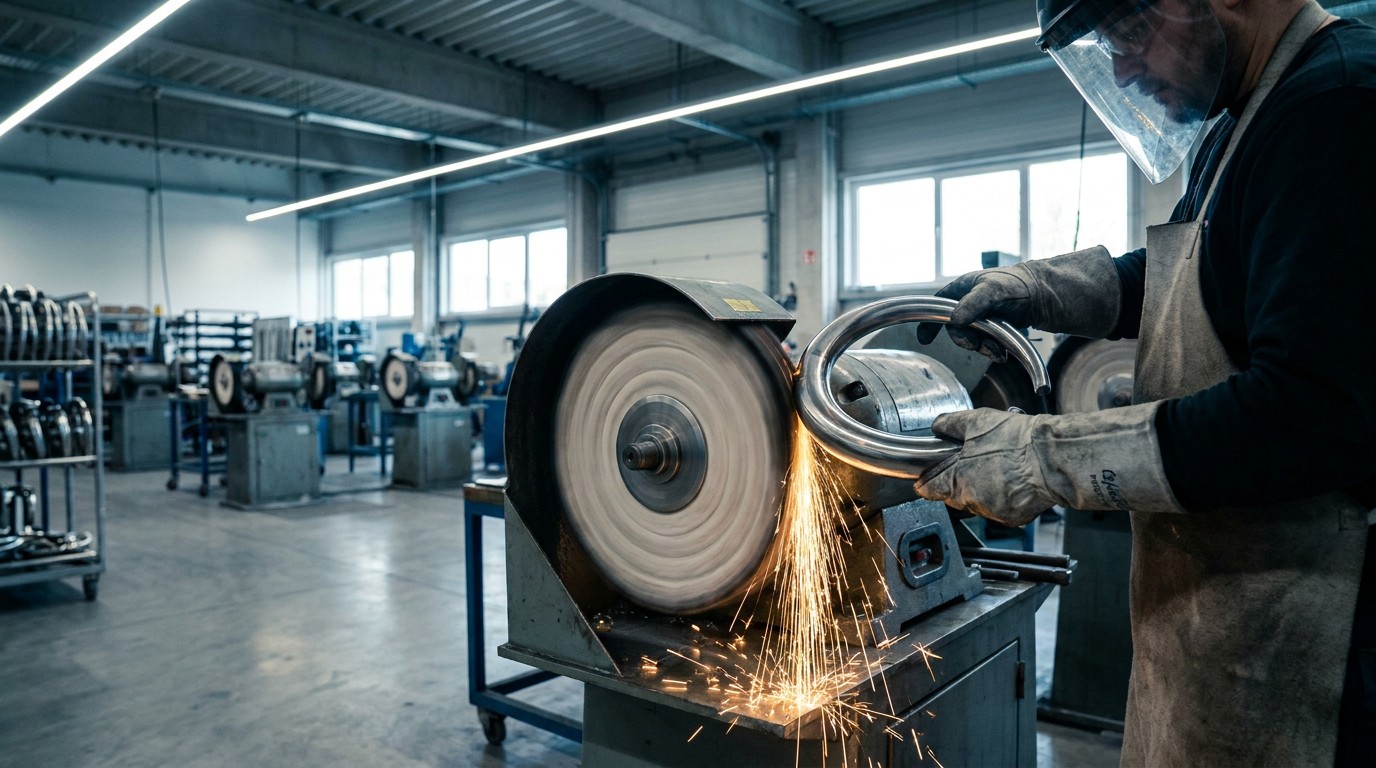
Cotton, sisal, non-woven, or wool? A practical guide to choosing the right buffing wheel for cutting, polishing, and finishing — with a density and RPM matching table. Target keywords: how to choose buffing wheel · buffing wheel types · buffing wheel for polishing
Choosing a buffing wheel sounds simple — until you burn a batch of stainless parts because the wheel was too dense, or you spend an extra hour per job chasing a haze that a softer wheel would have removed in one pass.
The truth is, there is no “best buffing wheel.” There is only the right wheel for your stage, your material, and your required finish. This guide walks through the four decisions that matter, so you can stop guessing and start matching.
Step 1: Match the wheel to the polishing stage
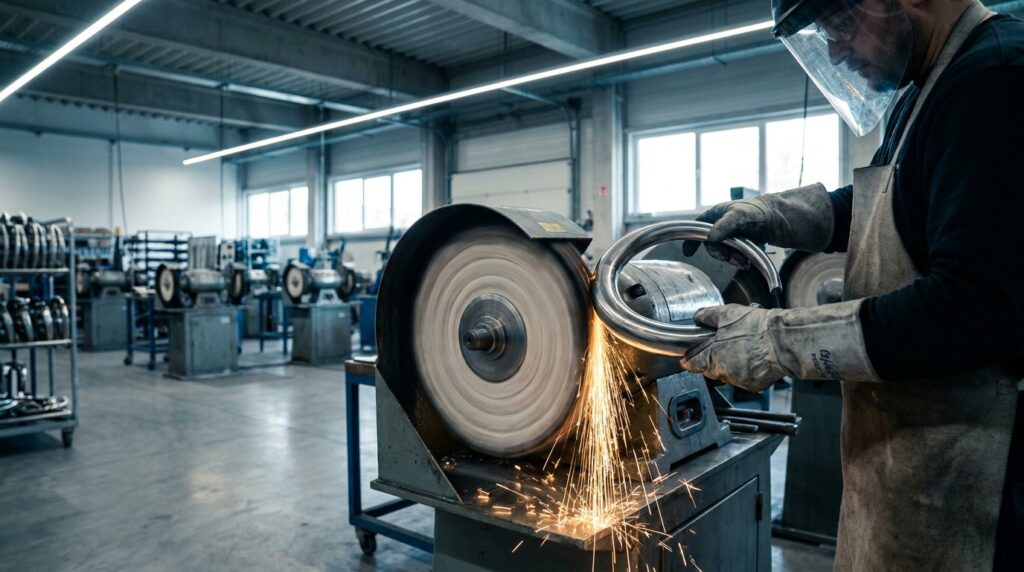
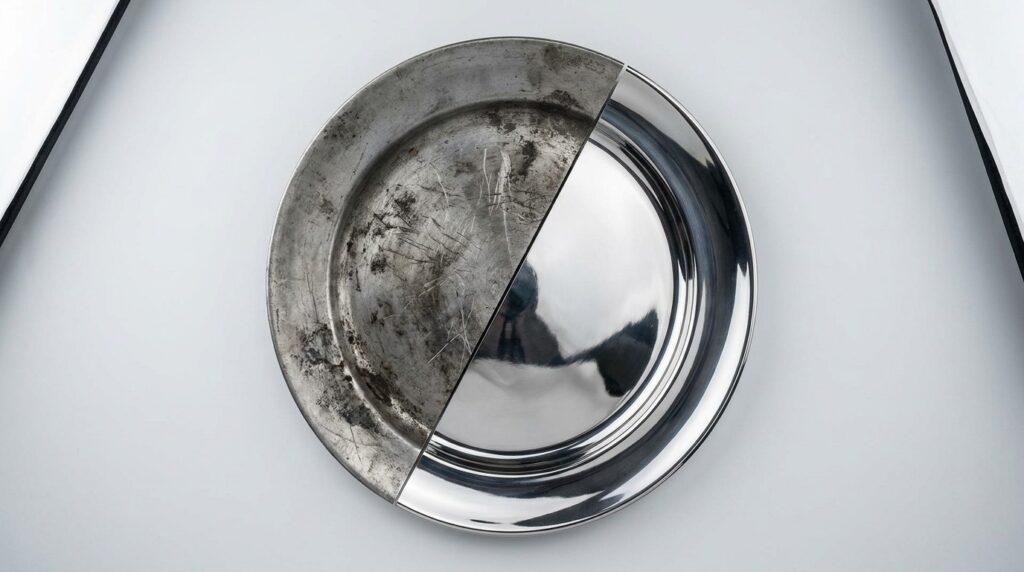
Production polishing almost always runs in three stages. Each stage needs a different wheel personality.
| Stage | Goal | Recommended wheel type |
| Cutting | Remove deep scratches, machining marks, oxidation | Dense cotton (tight-sewn), sisal, or a sisal/cotton combination |
| Polishing | Smooth the surface toward a uniform satin | Medium-density cotton, loose-sewn cotton |
| Finishing | Produce final high gloss / mirror | Loose cotton, bias-cut, or wool wheel |
Many shops try to save money by using one “all-purpose” wheel for everything. That trade-off usually costs more in rework and consumables than the savings — because a cutting wheel is too aggressive for finishing, and a finishing wheel can’t remove the scratches a cutting wheel should have.
Step 2: Choose the cloth material
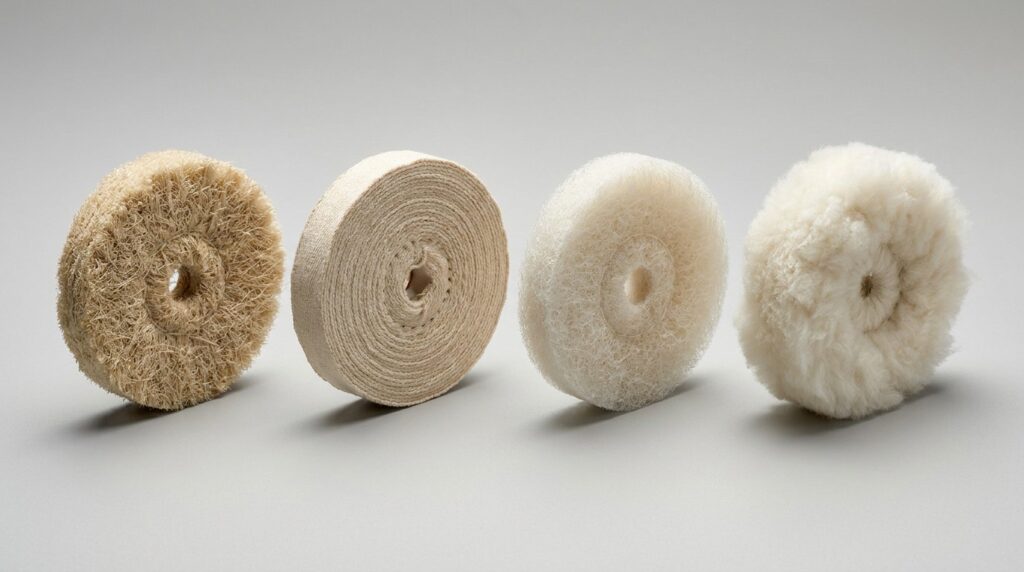
The fabric determines the wheel’s cutting power and the finish it leaves behind. Here is how the four main materials compare:
| Material | Cutting power | Finish quality | Best for | Notes |
| Sisal | ★★★★★ | ★★☆ | Stainless steel, steel, aluminum — first-stage cutting | Hard natural fiber; removes deep scratches fast; needs compound |
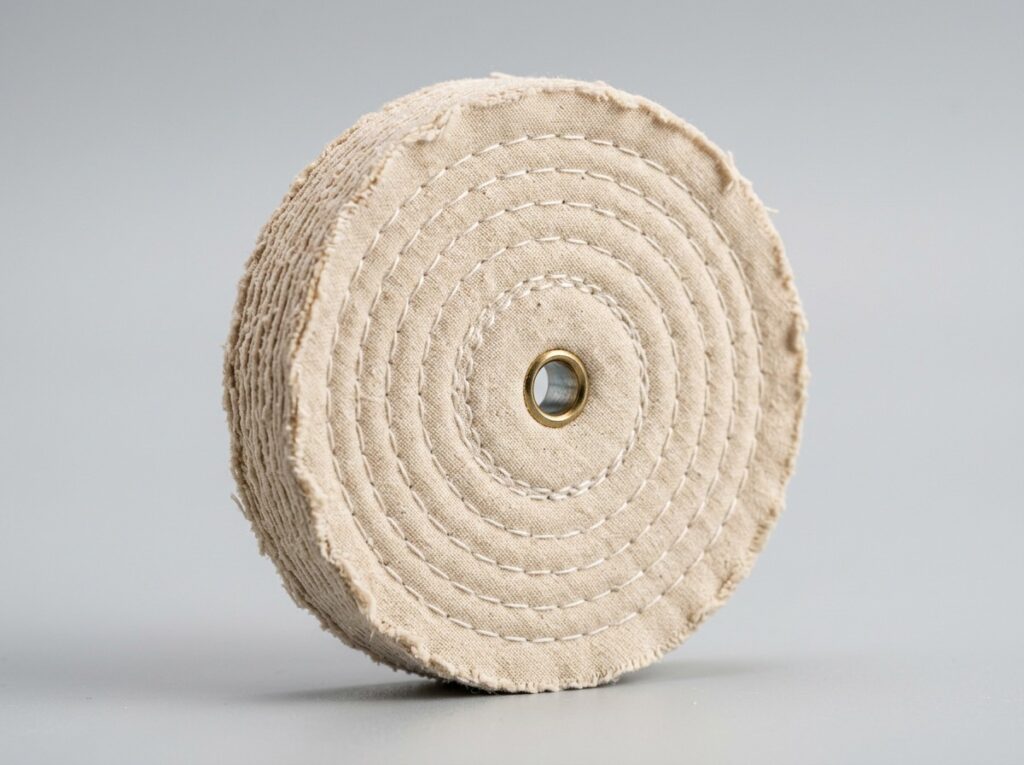
| Cotton | ★★★☆ | ★★★★ | General-purpose: all metals, most stages | The workhorse. Range from dense (cutting) to loose (finishing) |
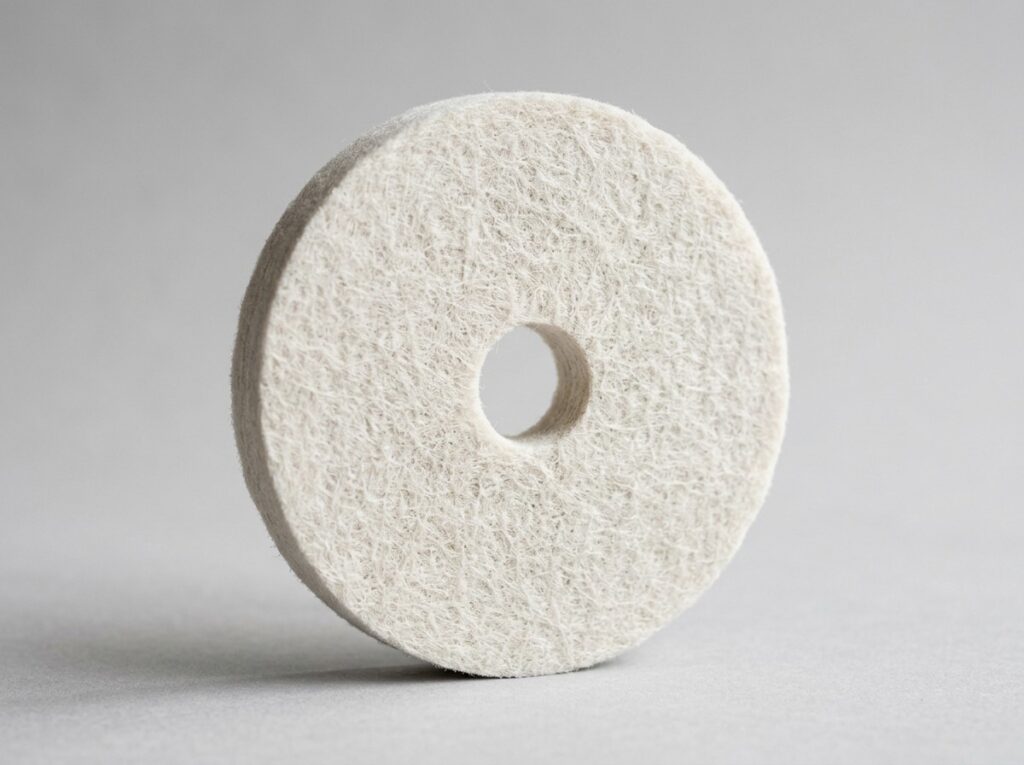
| Non-woven | ★★★ | ★★★☆ | Deburring, satin finishes, cleaning between stages | Available in grit grades like sandpaper; can run wet or dry |
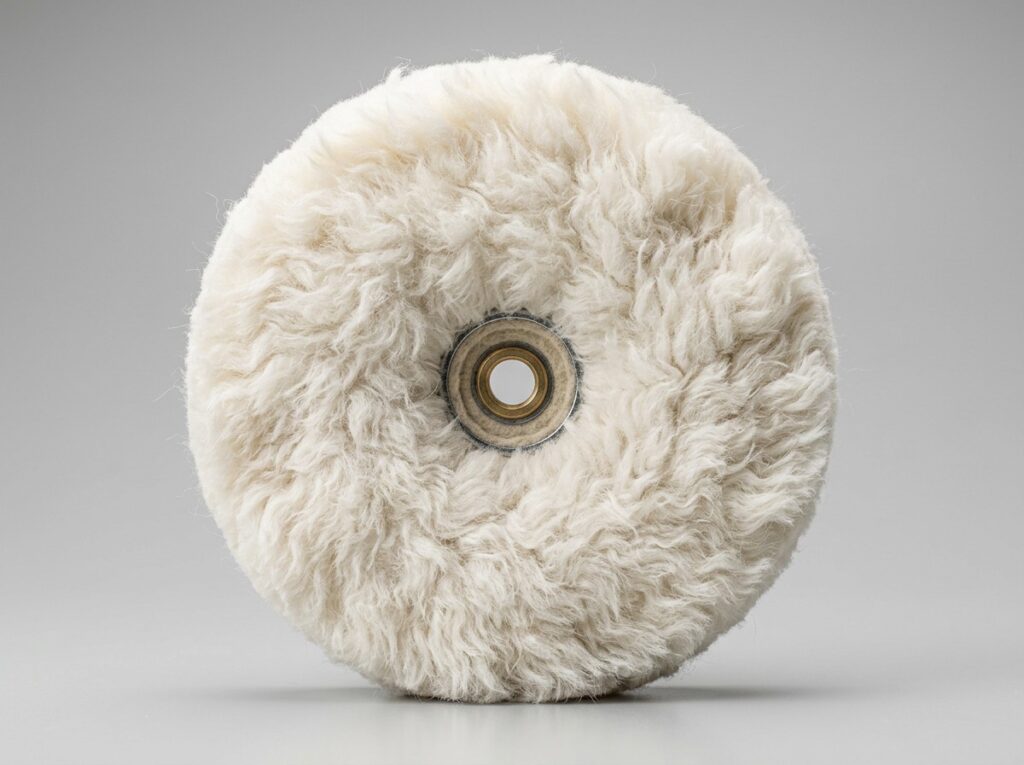
| Wool | ★★ | ★★★★★ | Final mirror finish on soft or sensitive surfaces | Low cutting, highest gloss; delicate on edges |
A typical stainless-steel part, for example, moves: sisal (cutting) → medium cotton (polishing) → loose cotton or wool (finishing). Aluminum, being softer, usually skips the aggressive stages: medium cotton → loose cotton.
Step 3: Check density and stitching — they control the “feel”
Two cotton wheels can look identical and behave completely differently. What matters is how the cloth is layered and sewn:
Density (ply)
- : the number of cloth layers.
2-4 ply
= softer, flexible, for contour work and finishing.
6-8 ply
= harder, more cutting power, for flat surfaces and heavy cutting.
Stitching
- : tight-sewn wheels are hard and cut aggressively; loose-sewn or unsewn wheels are soft and produce higher gloss. Spiral-sewn patterns balance both.
Bias cut
- : cloth cut on the bias reduces thread fraying and lets the wheel hug curved surfaces — the best choice for irregular parts.
If your workpiece has flat areas and tight corners, consider running a stitched wheel for the flats and a softer bias-cut or pleated wheel for the contours.
Step 4: Match wheel diameter to spindle speed
The number that actually matters is surface speed, not RPM alone. A 4-inch wheel at 3,450 RPM is moving much slower than a 14-inch wheel at the same RPM — and both behave differently on the workpiece.
Rule of thumb for cloth buffing wheels: 3,000-6,000 surface feet per minute (SFM).
| Wheel diameter (in) | Approx. RPM for ~4,500 SFM |
| 4″ | 4,300 |
| 6″ | 2,900 |
| 8″ | 2,150 |
| 10″ | 1,700 |
| 14″ | 1,200 |
Run too fast and you burn the workpiece and shred the wheel. Run too slow and the wheel can’t cut — you end up pushing harder, which causes heat anyway. When in doubt, start slower and increase in small steps.
Three mistakes we see in production shops every week
Skipping stages.
1. Jumping straight from a coarse cut to a finishing wheel leaves deep scratches that no finishing compound can remove. Each stage removes the previous stage’s marks — that’s the point.
Using a dense wheel on thin or soft parts.
2. Thin aluminum, plated parts, and delicate edges deform or burn quickly under a hard wheel. Drop the ply count and the pressure.
Ignoring wheel condition.
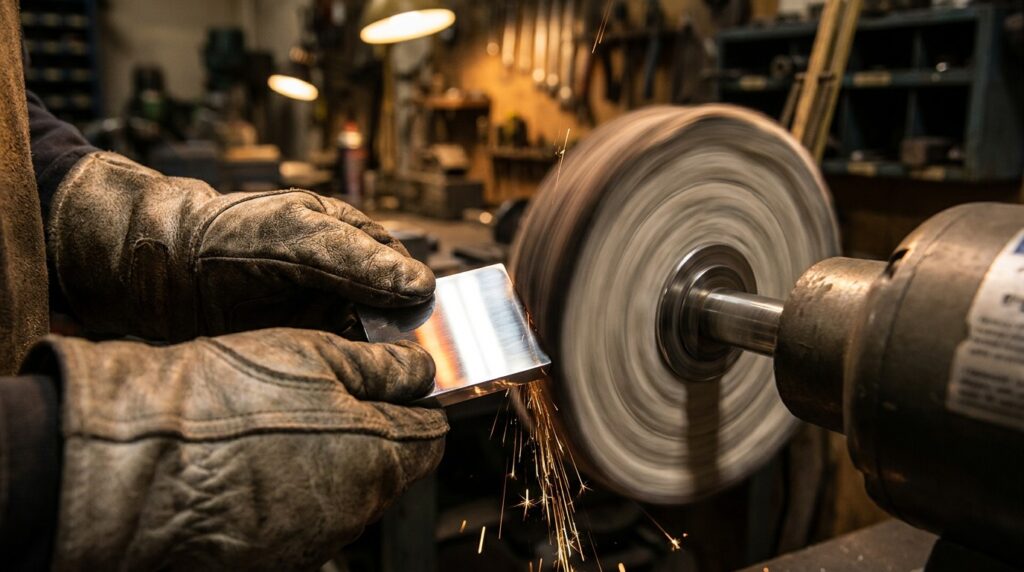
3. A loaded or glazed wheel stops cutting and starts polishing itself — and then it burns the work. Dress the wheel regularly with a rake, and replace it when the diameter has worn down noticeably (which also raises surface speed and heat).
What to ask before you order buffing wheels in bulk
Before committing to a supplier, confirm these points — they determine whether your line runs smoothly or stops for rework:
- Can you provide a
selection chart
matching wheel type, density, and stitch to material and finish requirement?
- What is your
batch-to-batch consistency control
? (Size, density, stitch strength — all affect performance.)
- Do you offer
custom sizes, densities, and center holes
? What is the MOQ for custom work?
- What is your
lead time
for standard and repeat orders?
- Can you supply
samples
for evaluation before a bulk order?
We manufacture buffing wheels from raw cloth through finished wheels — from sisal and cotton to non-woven and wool, in diameters from 4″ to 24″ with custom density and stitching. [Browse our buffing wheel range](内链: 布轮产品分类页), [download the wheel selection chart](内链: 选型表PDF下载), or [request a free sample kit](内链: 询盘表单) and we’ll help you match the right wheel to your process.
FAQ
Q1: What’s the difference between a buffing wheel and a polishing wheel?
There’s no strict industry line. In practice, “buffing” usually refers to cutting/polishing with compound on cloth or sisal wheels, while “polishing” often describes finer finishing — often on softer or non-woven wheels. Many people use the terms interchangeably; the wheel type matters more than the label.
Q2: Can I use the same wheel for stainless steel and aluminum?
You can, but it’s not optimal. Aluminum is much softer and needs lower SFM and lighter pressure; a wheel set up for steel can burn aluminum. Dedicated wheels per material reduce defects and consumables cost.
Q3: How do I know if my wheel is too dense?
Signs: the workpiece burns or discolors, edges round over, or you’re getting chatter marks on flat surfaces. Try a lower-ply or looser-sewn wheel and reduce pressure.
Q4: How long does a buffing wheel last?
It depends on duty, material, and how well it’s dressed. A well-maintained cotton wheel on moderate duty can last weeks of daily production; heavy cutting on hard metals wears them much faster. Regular dressing extends life significantly.
Q5: Do you provide samples?
Yes — we offer free evaluation samples so you can test wheel type, density, and stitching on your own parts before ordering.